A Bronze Goddess Comes Home to Arezzo
Come meet a goddess who has never truly left her city
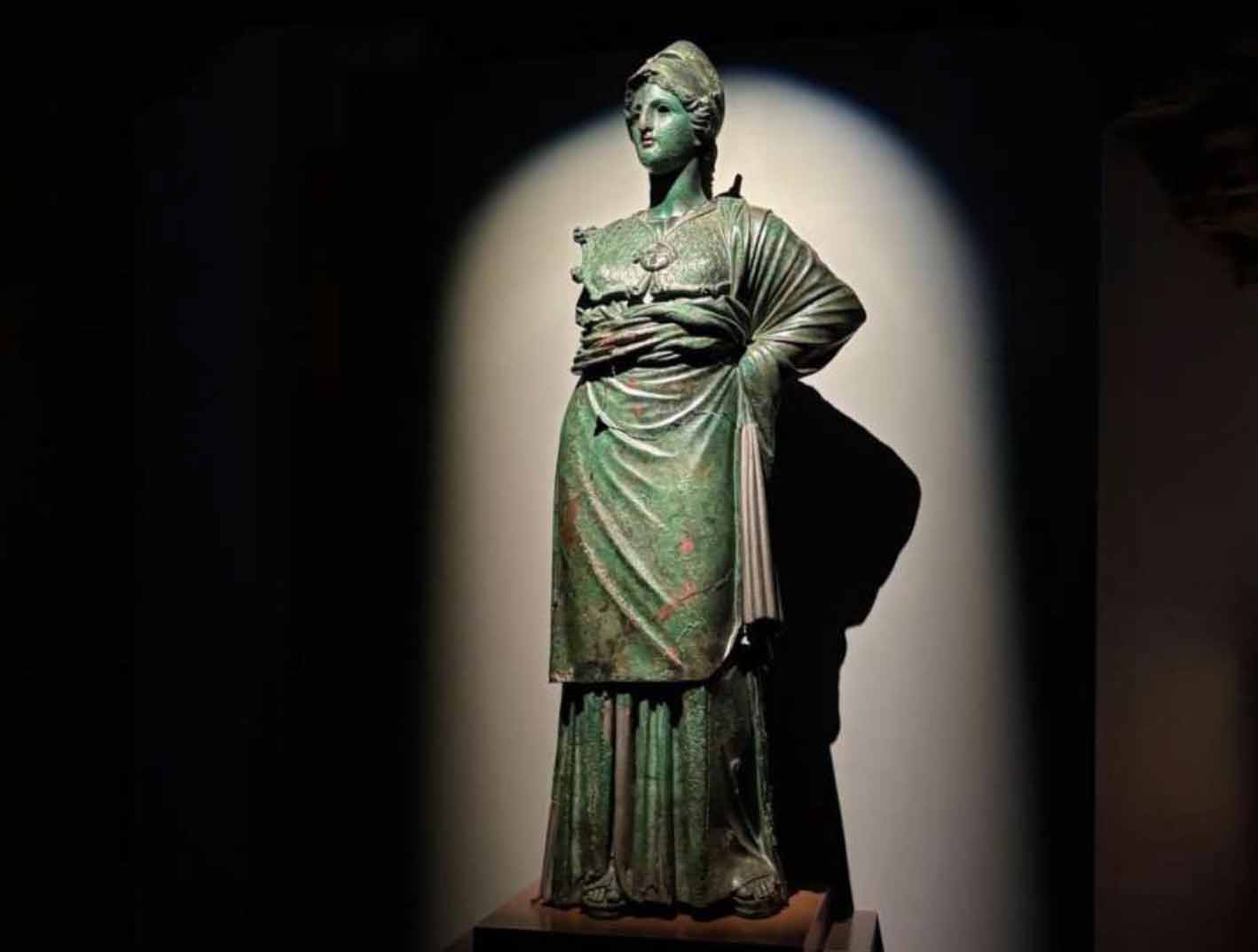
In Arezzo, some works of art are far more than museum pieces. They are symbols of memory, identity, and neighborhood pride. That is certainly true of the extraordinary Minerva of Arezzo, the famous bronze statue discovered in 1541 near the Church of San Lorenzo, now returning to the city from February 15 to September 6, 2026 for a special exhibition at the “Gaio Cilnio Mecenate” National Archaeological Museum. After centuries in Florence, this powerful goddess is finally coming home—at least for a while.
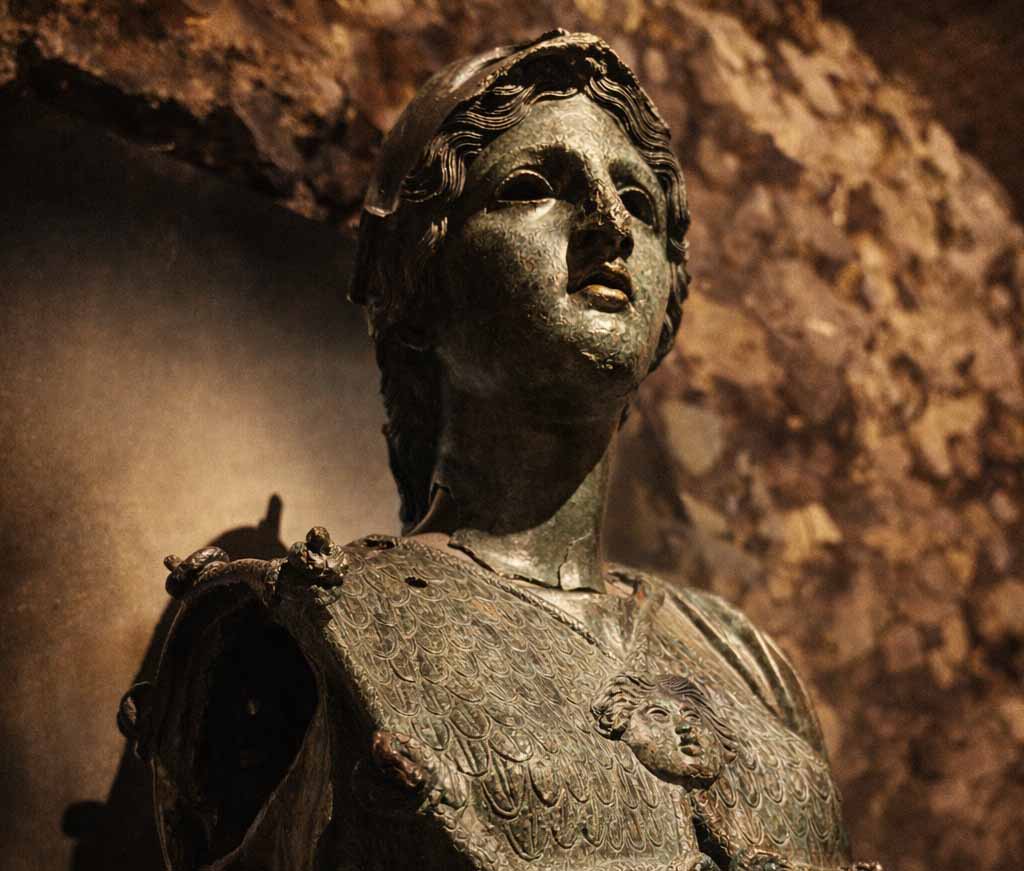
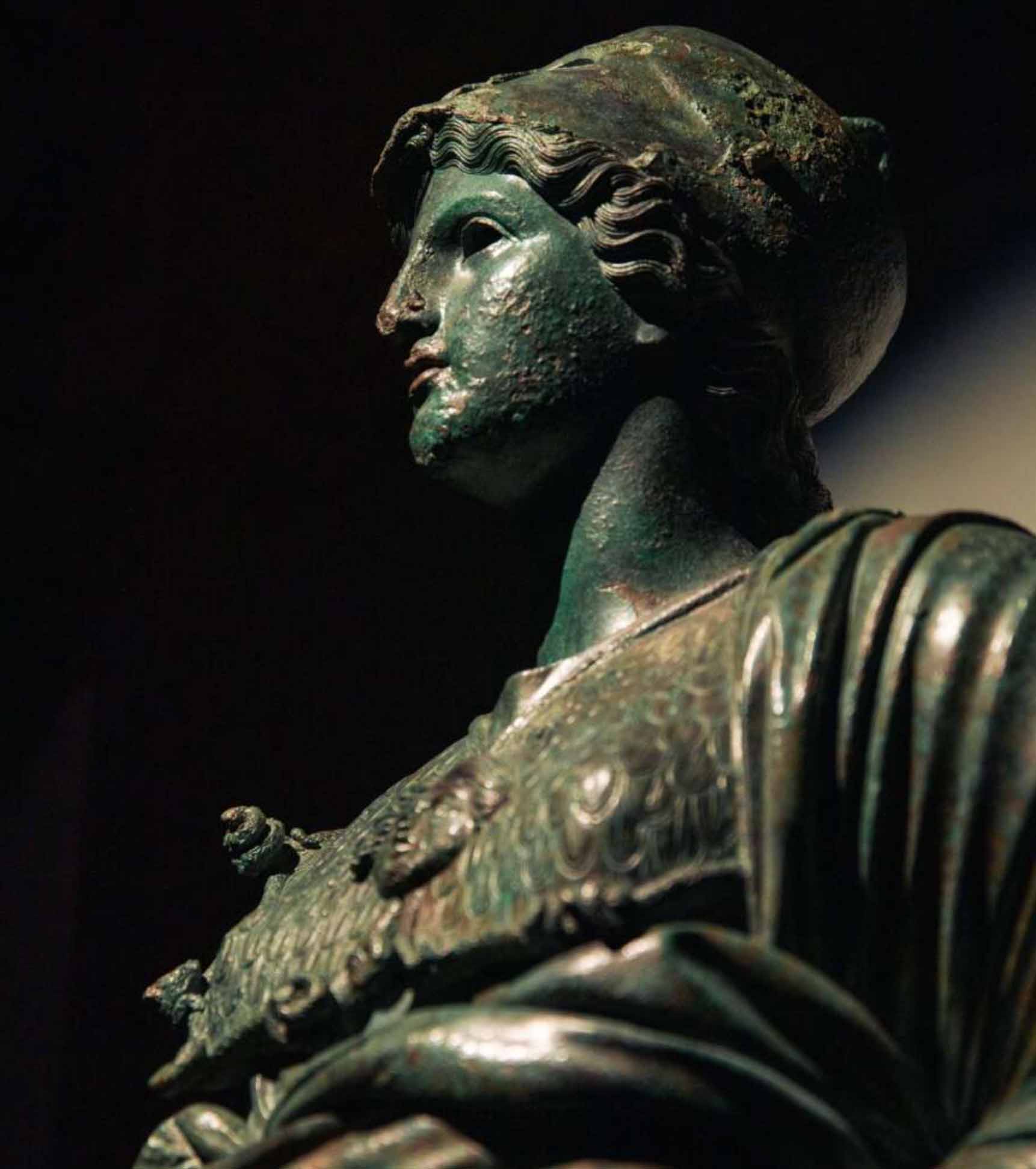
Standing 150.5 centimeters tall, the statue depicts Athena, or Minerva, wearing a a long tunic, a draped cloak, and her divine protective aegis adorned with Medusa’s head, and a Corinthian helmet. Dating to around 300 to 280 BCE, the sculpture reflects a Hellenistic model probably created in Italy or Magna Graecia. While its style looks toward the Greek world, the bronze is also a major work of Etruscan art, revealing how Etruria transformed Mediterranean influences into something uniquely its own.
Why This Bronze Matters So Much
The Minerva is not important only because she is beautiful. She is a dazzling example of the technical sophistication achieved in antiquity through lost-wax bronze casting, and she also opens a window onto Arezzo’s role as a center of excellence in metalworking already in Etruscan and Roman times. Looking at her, we are not simply admiring a goddess, but the intelligence of a civilization able to turn bronze into motion, balance, strength, and elegance. It is the kind of sculpture that seems to whisper, with absolute authority: “Yes, more than two thousand years ago, we already knew how to make wonders.”
Who Is Minerva?
For the Romans, Minerva was the goddess of wisdom, the arts, crafts, professions, and later also of military strategy. She was commonly identified with the Greek Athena, yet in the Italic world she took on a special role as a protector of human ingenuity, practical thought, technique, and skilled workmanship. It is no surprise that a figure like this was so beloved: Minerva represented not brute force, but applied intelligence, a clear mind, a capable hand, and a well-built plan. In other words, the perfect goddess for a city that has long understood the value of art, craftsmanship, and vision.
A Renaissance Discovery with the Flavor of Legend
The discovery of the Minerva feels almost like a scene written by history itself. In 1541, as Medici authority was reshaping Arezzo and Cosimo I was transforming the city’s skyline, men digging a well near San Lorenzo suddenly brought an ancient goddess back into the light. The bronze emerged from the earth at the very moment a new political order was rising above it, as if Arezzo were quietly insisting on the endurance of its much older soul. Immediately admired as a masterpiece, the statue was presented to Cosimo I de’ Medici and carried to Florence, where he placed it in his private study. The image is irresistible: a Renaissance ruler, surrounded by art and ambition, recognizing the power of an ancient treasure almost the instant it was reborn. And though the Minerva would go on to become one of the great stars of the Florentine collections, her story has always remained rooted in Arezzo.
A Return That Is Much More Than an Exhibition — Why This Story Is So Fascinating
Perhaps because Minerva gathers together everything I love to tell about Italy: art, history, myth, neighborhoods, local identity, beauty, and continuity. She is not simply an ancient statue. She is a bronze being who has passed through the worlds of the Etruscans, Romans, the Renaissance, the Medici, museums, and popular memory, and who now returns to remind us that certain masterpieces do not belong only to the past. They also belong to the places that dreamed them, found them, and never forgot them.
From the Museum to the Streets of Arezzo, Minerva Is Waiting
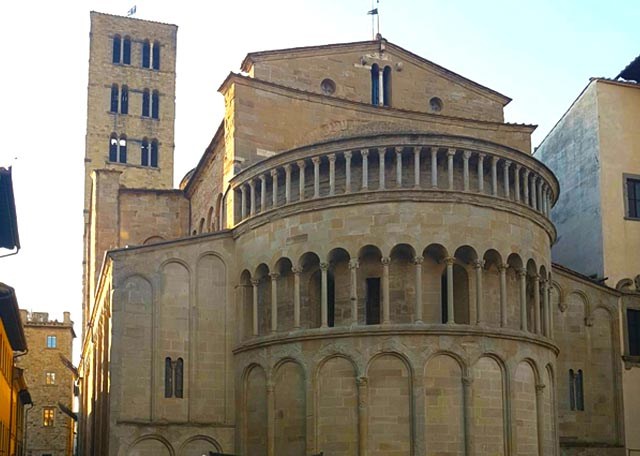
If you find yourself in Arezzo between February and September 2026, don’t miss the chance to see the original Minerva in this extraordinary homecoming exhibition at the Museo Archeologico Nazionale “Gaio Cilnio Mecenate.” And better yet, come join me in Arezzo this June or September, and you too can stand before this magnificent bronze and admire her helmet, the head of Medusa, and the graceful folds of her drapery up close. After all, it is not every day that a goddess returns home.
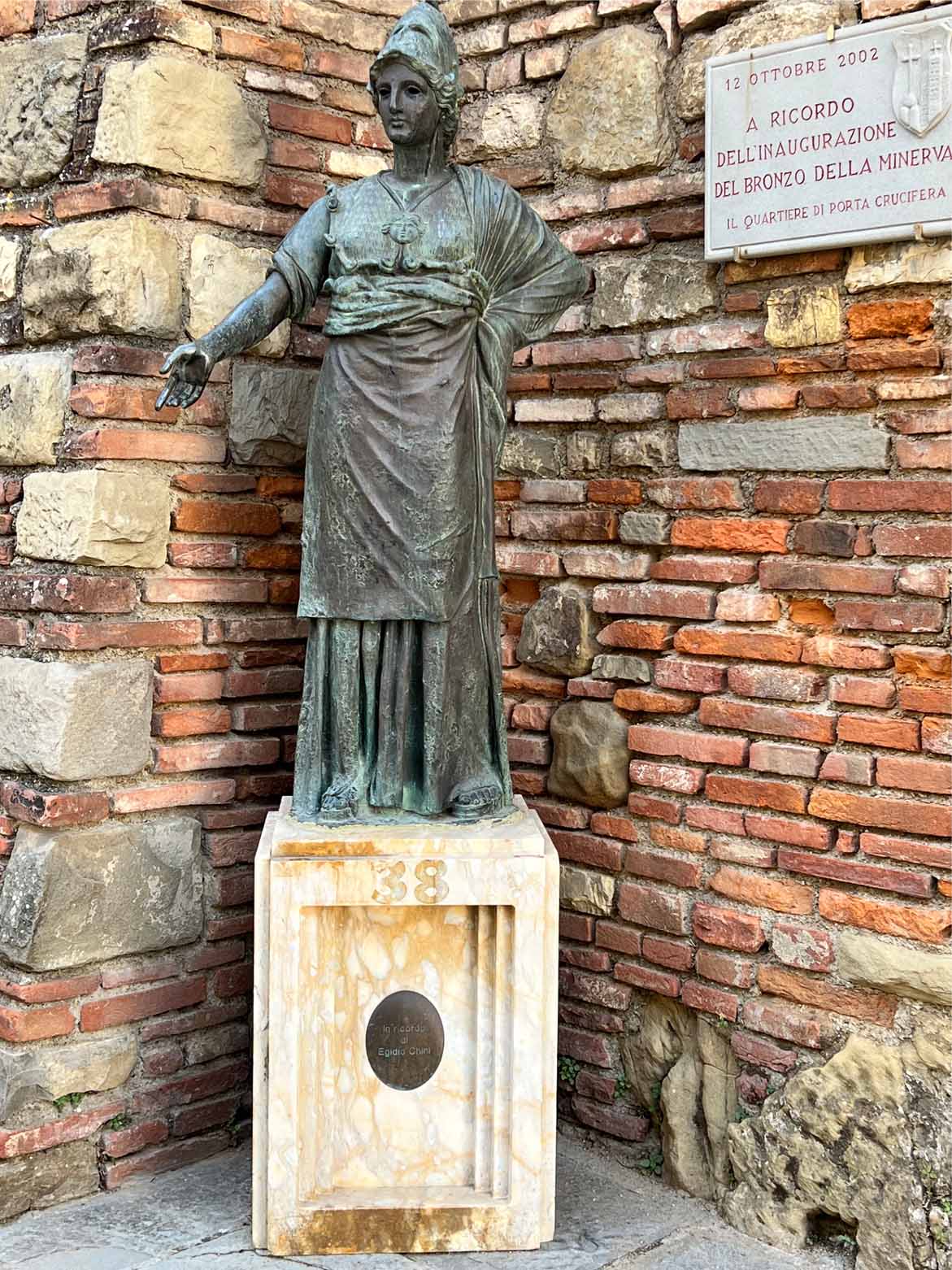
What makes this even more special is that Minerva’s presence can still be felt beyond the museum walls. On any ordinary day, as you wander through the streets of Arezzo, you can also spot a replica of the statue in the San Lorenzo area of Porta Crucifera/Colcitrone, a quiet and beautiful reminder that this goddess has never really been forgotten.